Why Discovery Became eCommerce’s Biggest Opportunity of 2025
Reading time: 6 minutes
KEY TAKEAWAYS
→ Only 1 in 10 consumers say keyword search reliably helps them find what they want¹.
→ 60% discover products unintentionally on TikTok² - optimise for inspiration and not only intent.
→ More than 50% of shoppers want AI support when browsing online¹.
→ The future of eCommerce is driven by authentic inspiration + intelligent guidance, not transactional design.
→ Learn from the greats: shoppers who engage with Primark’s Primania gallery generate an 80% uplift in PDP views³.
Intent is no longer the starting point - inspiration is
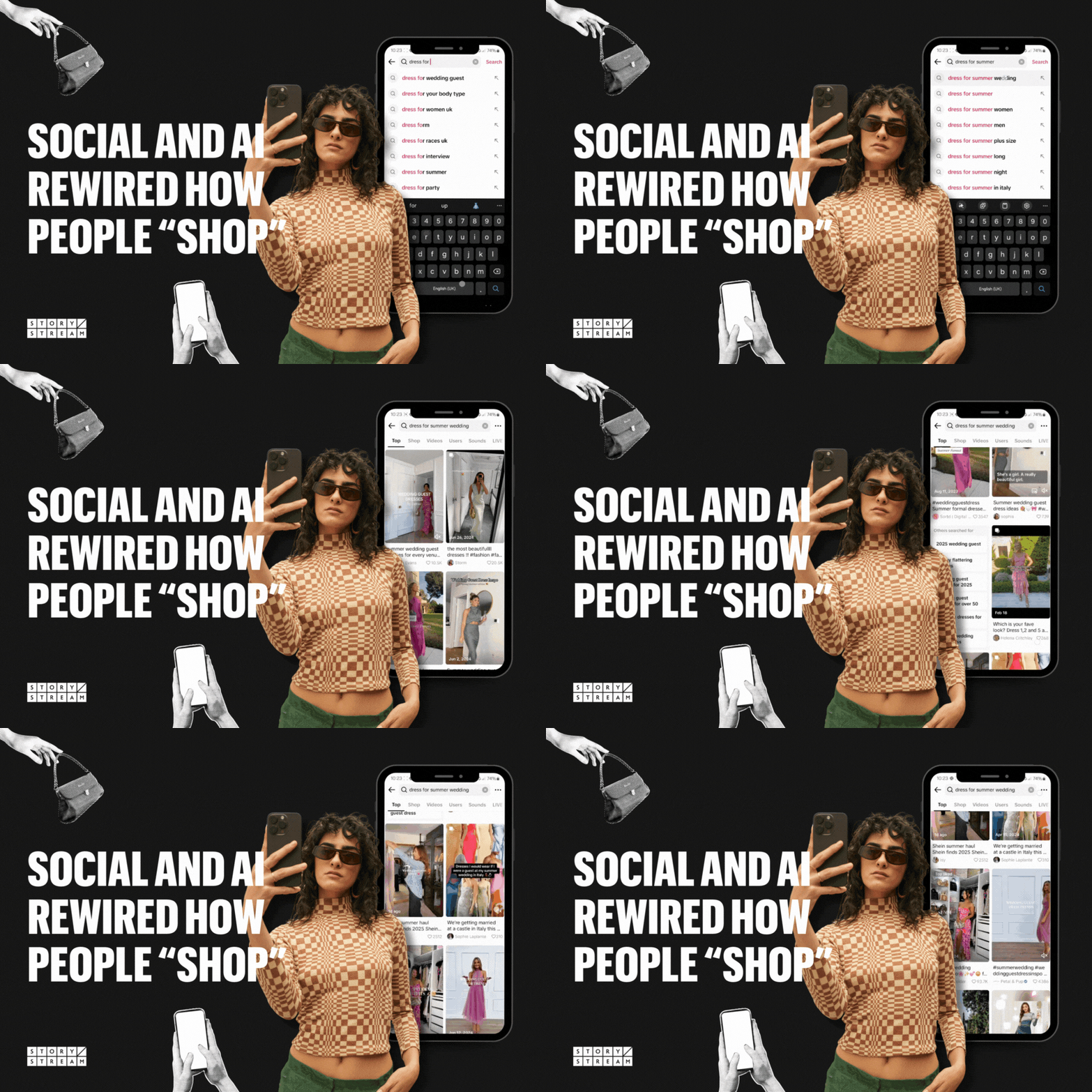
For years, retailers optimised sites for a journey that once made perfect sense: search → product page → checkout. But 2025 made one thing unmissably clear: most visitors start with curiosity rather than clear intent.
Research shows that the majority of fashion shoppers now arrive in browse mode7, inspired by a creator, a trend, an event or a passing idea, and hoping the website will help them explore it. They arrive on homepages or product pages wanting outfit context and social proof to be inspired: the things that shape buying confidence. Yet the sites they land on often still reflect an older logic: they’re structured for the 10% of visitors who know exactly what they want7.
This mismatch between how people shop and how sites respond is what turned discovery into the defining eCommerce opportunity of the year.
Social and AI rewired how people “shop” - even when they’re not shopping
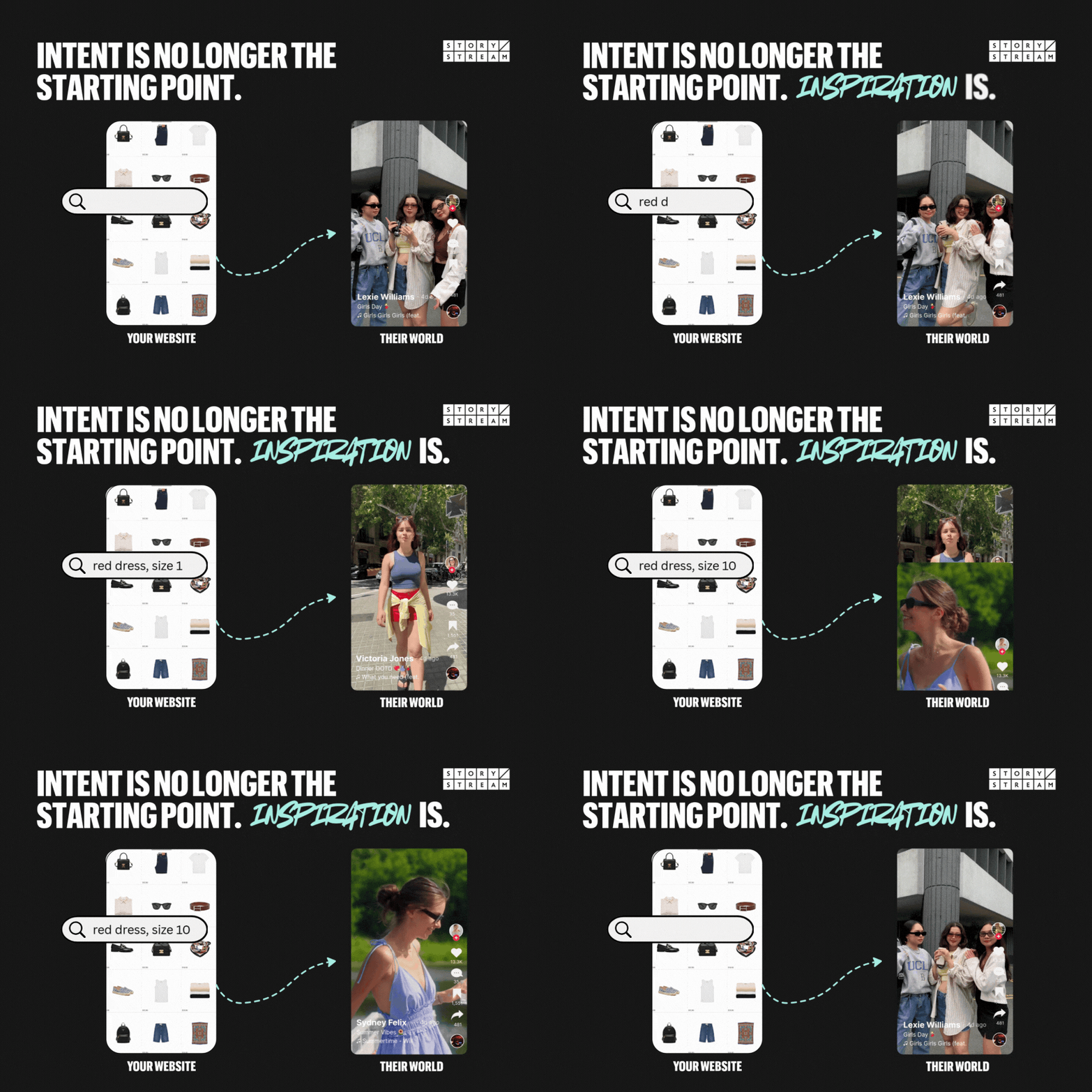
Discovery begins in a scroll, a swipe, a “For You Page” on social that seems to know you better than you know yourself, rather than an eCommerce homepage.
Around 60% of consumers now discover products unintentionally on TikTok². They’re not actively shopping but passively absorbing ideas. At the same time, more than half of shoppers want AI assistance¹ when they do start exploring, because conversational and visual tools feel more natural (and, paradoxically, human!) than typing keywords into a search bar.
These two forces - social and AI - have reshaped expectations in ways traditional eCommerce was never designed for as they offer intuitive, context-led journeys that feel effortless.
A) The death of keyword intent
Shoppers think in context:
• “What should I wear to a winter wedding?”
• “I want something I can wear with jeans.”
• “Show me easy pieces I can dress up or down.”
Legacy search engines simply weren’t built for this behaviour. It’s no surprise that only 1 in 10 shoppers say they reliably find what they need via keyword search¹. Social and AI, on the other hand, deliver contextual, aesthetic suggestions instantly. That comparison is hard for shoppers to forget.
B) Discovery now happens through behaviour, not intention
Alongside technology, the rhythm of discovery has completely changed as well. AI models learn from how people interact, not just what they explicitly request. Social platforms serve inspiration based on micro-signals: pauses on a video, saves, replays, comments8. Consumers have gotten used to being guided through content that feels personally relevant, even when they didn’t ask for it.
This has quietly reshaped expectations everywhere else. When shoppers arrive on a fashion website, they’re not thinking, “How does this search bar work?” They’re thinking, “Why can’t this site understand what I'm looking for in the same intuitive way TikTok or an AI assistant can?”
That gap - the psychological space between inspiration and action - is where eCommerce has felt the most friction this year.
If you want to audit whether your site is losing shoppers to this disconnect, our Browsing Majority Checklist walks through the warning signs.
What effective discovery looks like: the case of Primark
One of the clearest examples of this shift came from Primark, who joined us in our Reinventing Product Discovery webinar. With more than 16,000 products online, their challenge is in getting shoppers to see the whole breadth of their catalogue. Traditional PDPs and PLPs simply weren’t built to surface that level of range.
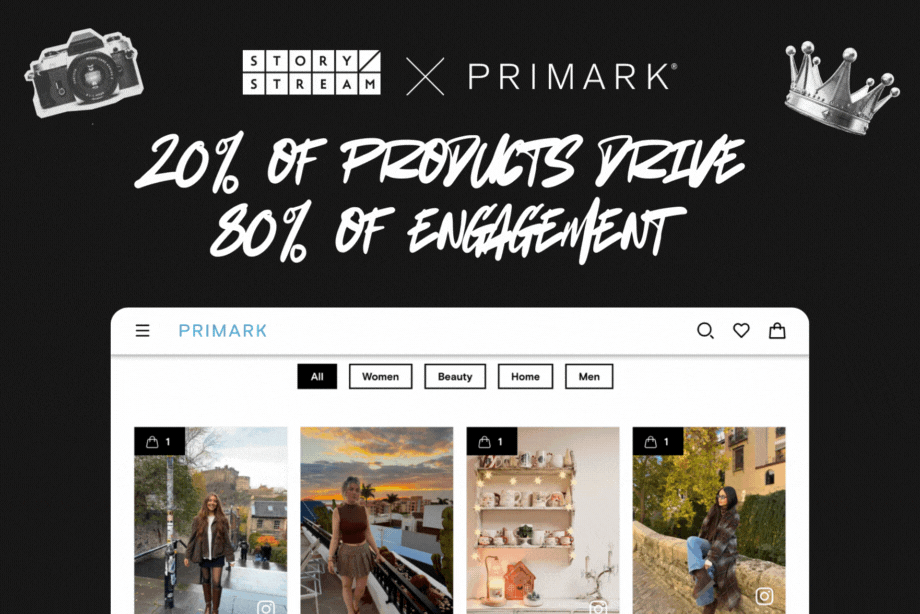
Zak, Primark’s Senior Content Solutions Manager, explained that just 20% of products generate most of the engagement, and only a fraction of users reach the bottom of a PLP³. Something had to change.
That change became Primania: a community-powered UGC gallery showcasing real customers and creators. And the results were striking:
Visitors who engage with Primania generate an 80% uplift in PDP views³
They scroll deeper than on traditional PLPs
They encounter looks, not isolated items
They see products modelled on real people, which builds trust
Zak put it simply:
“There is something fundamentally more engaging with content that influencers and customers create themselves.”³
Primark’s next evolution - rolling out StoryStream’s Shop the Look - builds on the same principle. Shoppers want outfit context. They buy into a look, not a lone SKU. Technology just needs to unlock that ease.
AI is emerging as the bridge between inspiration and action
Despite fears of fully automated “agentic shopping,” what actually took hold in 2025 was much more grounded. Shoppers weren’t looking for AI to make decisions for them - they wanted AI to make the journey feel clearer.
Tools like photo search, “shop similar,” conversational browsing, and aesthetic matching have quickly become the most practical uses of AI in retail. More than 50% of shoppers now expect AI support⁵, not as a novelty but as a form of clarity:
“What goes with this?”
“Show me alternatives.”
“I want something similar but softer / warmer / more formal.”
The brands getting ahead aren’t trying to reinvent the shopping experience. They’re smoothing the path between inspiration and action, letting AI connect the dots that legacy UX and search can’t.
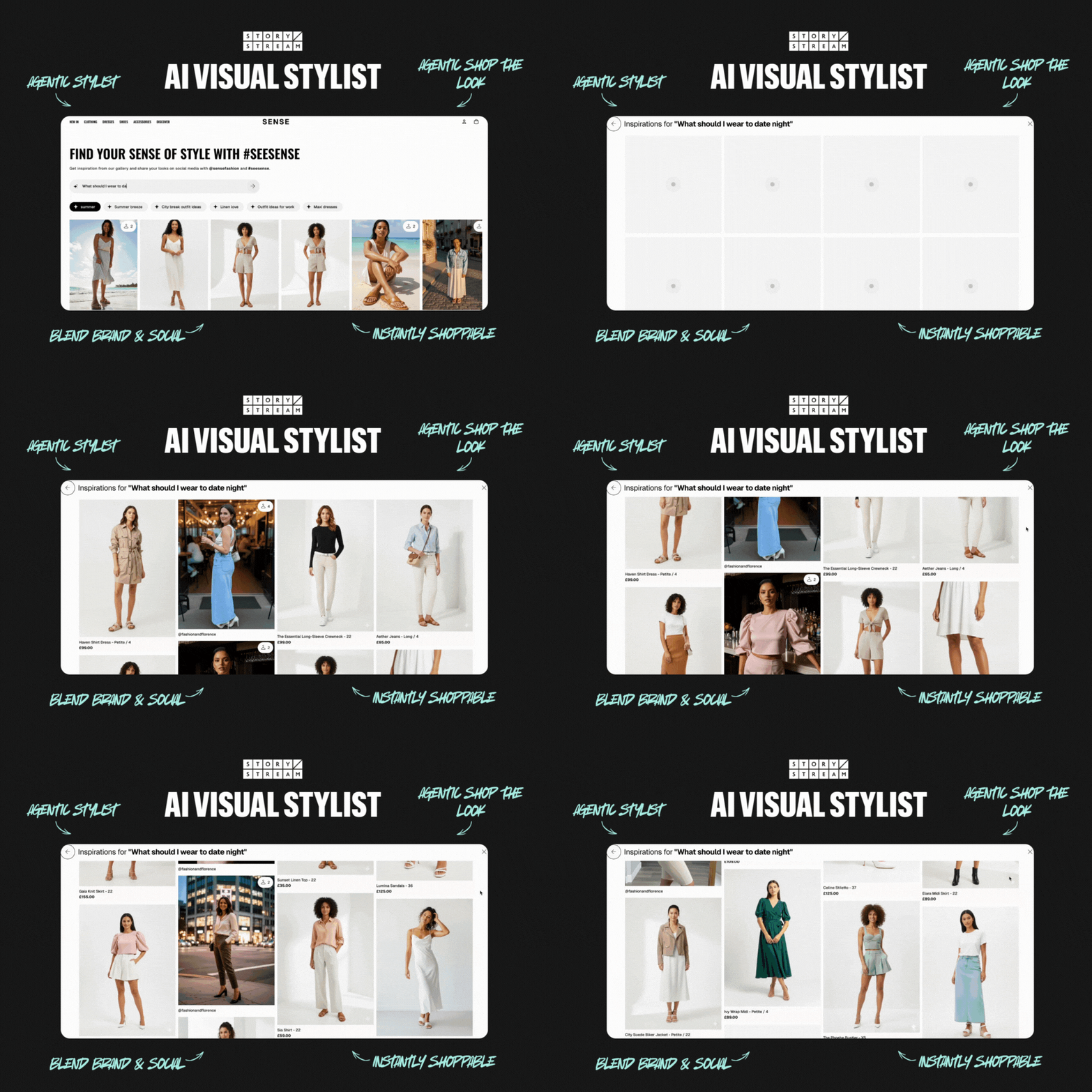
Tools like StoryStream’s AI Visual Stylist exist exactly in that middle ground: guiding shoppers through looks, contexts, and styling cues in a way that feels human and intuitive.
The Discovery Mandate for 2026
Across every dataset, brand conversation, and consumer insight this year, one pattern kept resurfacing:
eCommerce’s biggest bottleneck isn’t traffic - it’s discovery.
Brands lose customers because shoppers can’t find the right product, context, or inspiration.
The brands preparing for 2026 are the ones:
✔ Building onward journeys from the PDP
✔ Turning outfit content into shoppable exploration
✔ Using UGC and video to build trust
✔ Guiding shoppers through AI and visual intelligence
✔ Making websites feel more like social
Want a deeper dive? Our free guide,The New Rules of Fashion Discovery, covers the full framework of this shift - but the headline is simple: inspiration now drives intent, not the other way around.
References
¹ Google Cloud (2023). What’s Driving Search Abandonment in Online Retail. https://cloud.google.com/blog/topics/retail/new-research-on-search-abandonment-in-retail
² HubSpot (2025). Social Media Trends Report. https://www.hubspot.com/state-of-marketing/social-media-trends
³ StoryStream x Primark Webinar (2025). How Primark Is Reinventing Product Discovery for 2026. https://storystream.ai/blog/how-primark-is-reinventing-product-discovery-for-2026
⁴ McKinsey & Company (2025). Unlocking the Next Frontier of Personalised Marketing. https://www.mckinsey.com/capabilities/growth-marketing-and-sales/our-insights/unlocking-the-next-frontier-of-personalized-marketing
⁵ Fashion Network (2025). 55% of UK Consumers Use AI Chatbots When e-Shopping. https://uk.fashionnetwork.com/news/55-of-uk-consumers-use-ai-chatbots-to-help-them-when-e-shopping,1757765.html
⁶ StoryStream x Territory Influence (2025). Consumer Survey (through Pollfish).
7 Ahrefs (2025). AI Overview & Search Experience Study.
8 TikTok (2020). How TikTok Recommends Videos #ForYou. https://newsroom.tiktok.com/en-us/how-tiktok-recommends-videos-for-you

Marie Debarbieux
Meet Marie Debarbieux, Digital Marketing Executive at StoryStream. A visual storyteller at heart, with experience working in festivals that blend the world of tech and art, they help to handle all things communications at StoryStream, with a particular focus on visual content creation. They're also a film buff, which informs their approach to marketing, allowing them to construct visually driven stories that capture attention and drive engagement.
TRANSFORM YOUR
DISCOVERY EXPERIENCE
Patented AI Technology
AI Platform
Resources


© StoryStream 2026. All rights reserved.